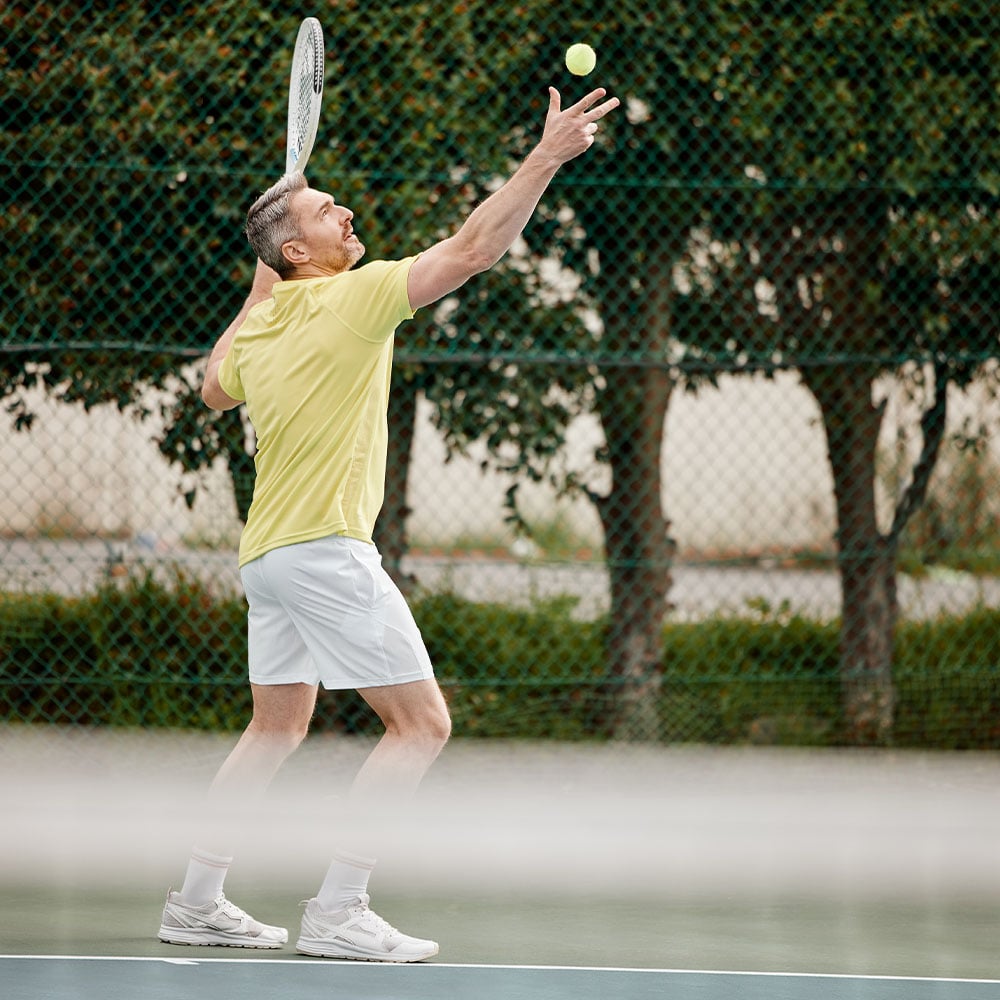
Looking over your shoulder at the road, reaching for something behind you, swinging your arms as you walk, or playing golf or tennis all require the body to handle rotation. Yet many training programmes focus only on moving forwards, backwards or up and down. Over time, the body may twist from the lower back, or simply lock the entire trunk.
Good rotation does not mean "the more you turn, the better". It means that the right joints take part, while the areas that need stability stay in control.
Rotation Comes from the Whole Body Working Together
A smooth turn usually involves:
- The feet and ankles making stable contact with the ground
- The knees and hips working together to transfer weight
- The pelvis and ribcage being able to move relative to each other
- The trunk switching between producing rotation and resisting excessive rotation
- The eyes, head and balance system confirming direction together
If one link is restricted, the body may concentrate the movement in the lower back, knees or shoulders. This is only one possible movement strategy, and appearance alone cannot tell us the cause of pain.
Rotation and Anti-Rotation Matter Equally
Rotation training is not just about twisting the body. Daily life also often calls for anti-rotation, for example carrying a bag in one hand, pushing open a heavy door, holding a child who keeps moving, or keeping your direction on uneven ground.
Training can therefore include:
- Mobility: Ribcage rotation, hip turning and multidirectional stepping
- Control: Holding the position of the pelvis, knees and feet within the usable range
- Anti-rotation: Keeping the trunk stable against a sideways pull
- Force transfer: Passing force from the ground through the trunk to the upper limbs
- Reaction: Regaining balance when speed or direction changes
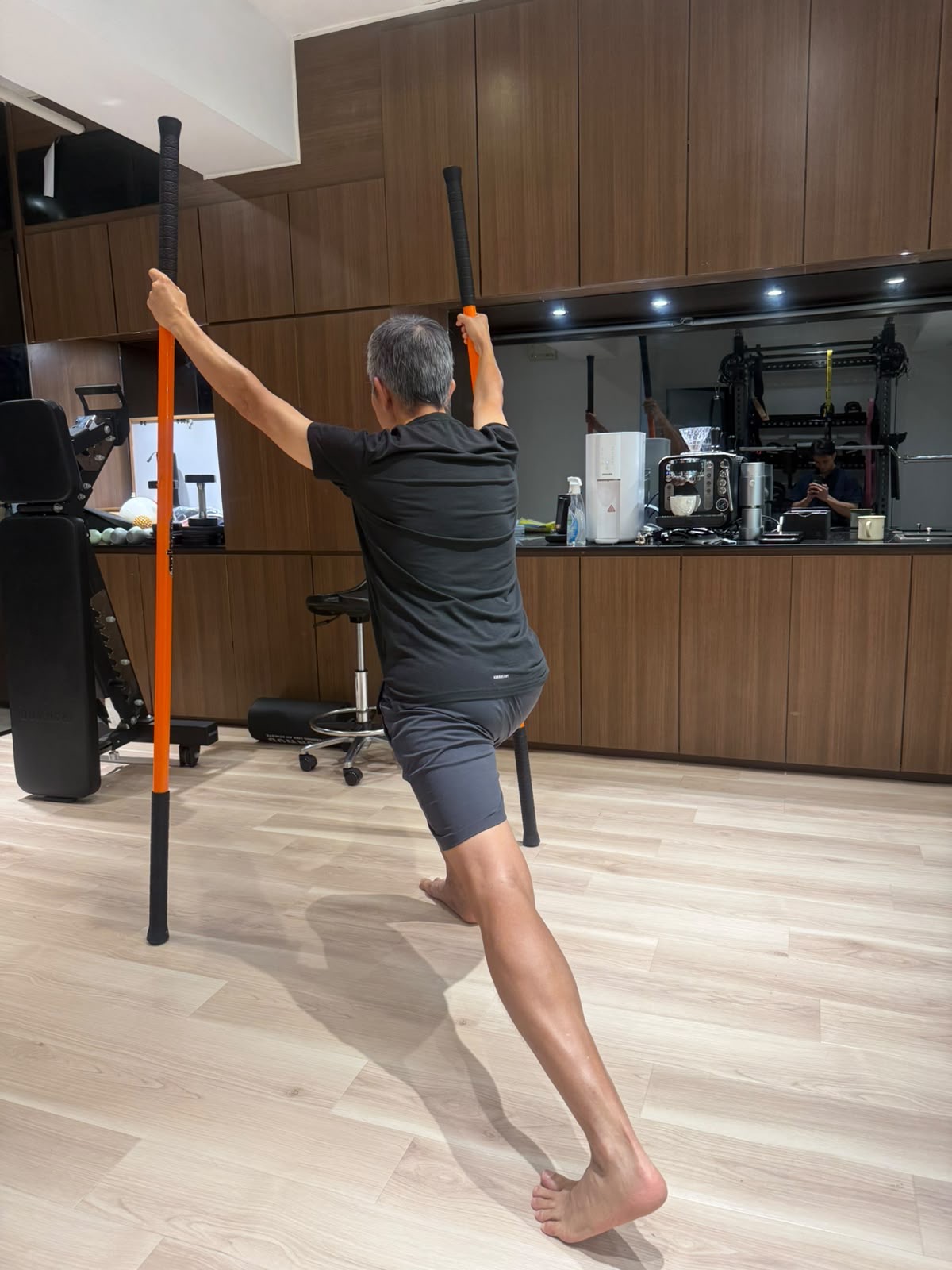
The Role of Stick Mobility
TOBETTRA's DynaStrength Training™ (DST) is our proprietary movement system, developed through years of working with adults in midlife and beyond.
Within it, your Movement Specialist may use Stick Mobility as a specialist tool in some training.
The methodology follows a clear four-stage framework: Unlock → Load → Rebuild → Consolidate. Beyond enhancing movement performance, it is widely applied to support physical rebuilding for long-standing discomfort, age-related muscle loss, and restricted mobility.
A training stick can provide support, leverage, resistance and tactile cues, helping you feel the direction of force and the position of your body. In rotation training, it can be used to:
- Add support when standing or stepping
- Build whole-body tension by pushing, pulling or pressing on the stick
- Help you understand how the ribcage and pelvis move relative to each other
- Adjust the range and difficulty of a movement
- Give immediate feedback for anti-rotation and multidirectional loading
Stick Mobility does not automatically make training safe, and the aim is not to pull the body as far as possible. Your Movement Specialist chooses an appropriate level of resistance, stance, form of support and range of movement according to your capacity.
Building Rotation Through the Four Stages of DynaStrength Training™
1. Unlock: Observe whether the ribcage, hips, feet and ankles, or breathing are limiting your turn.
2.
Load: Build control through split stances, pushing and pulling, and anti-rotation exercises.
3. Rebuild: Bring rotation into stepping, walking, lifting, swinging and changes of direction.
4.
Consolidate: Add speed, load, endurance and variation in context according to your personal activities.
Progress can be tracked through range of rotation, fluency of movement, differences between the left and right sides, control under load and confidence in specific activities, rather than by how many degrees you can turn alone.
Who Might Want to Pay Attention?
- Need to slow down or stop before turning when walking around a corner
- Lower back feels especially tight after swinging a club or racket
- Body tends to lean sideways or twist when you carry something in one hand
- You can only look over your shoulder by turning your lower back or your whole body
- You want to improve your hiking, ball sports or everyday ability to change direction
When you can rotate, and can also resist rotation when you need to, your body has genuinely usable choices.